
2026.10.26
Farm Knowledge Hub
Many Diseases in Dairy Cows Occur Within 30 Days After Calving
The transition period (the 3 weeks before and 3 weeks after calving) directly impacts the economic efficiency of a dairy farm. So, what should dairy farmers keep in mind regarding their herd during this phase?
Diseases in dry cows
📉 During this period, dry matter intake (DMI) drops sharply, while the nutritional requirements for early lactation increase significantly.
In reality, health issues in dry cows do not occur by chance.
Hypocalcemia (milk fever) is often associated with a cascade of health disorders around the time of calving, such as:
- Retained placenta
- Metritis
- Reduced feed intake and energy imbalance
- Ketosis
What should be kept in mind for dairy cows during this stage?
A proper 60-day dry-off program goes beyond simply stopping milking; it requires strategic management:
✅ Maintain an optimal Body Condition Score (BCS) of 3.0–3.5
✅ Adjust the Dietary Cation-Anion Difference (DCAD) to an appropriate level during the close-up dry period (21 days before calving) to support calcium mobilization
✅ Supplement with Vitamin E and Selenium to boost udder immunity
Healthy cows experience easier calvings, achieve better milk production, and significantly reduce potential losses!
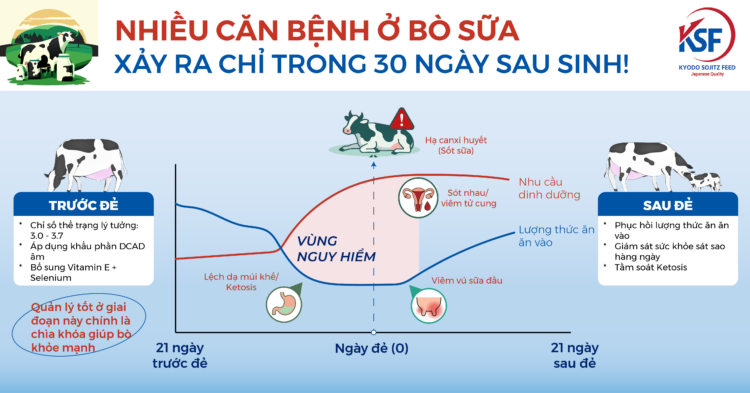
Many diseases occur in cows after calving. Image source: KSF
We hope this article has helped you better understand how to care for dairy cows after calving. If you are raising ducks, please explore KSF’s range of animal feed products and consult with our technical team to develop a nutritional program best suited to the specific conditions on your farm.
Need Nutrition Consultation?
Reach out to KSF for
custom feed solutions for your farm.
Related Article




Need Nutrition Consultation?
Reach out to KSF for
custom feed solutions for your farm.